










Why the best law firms are making compliance a strategic advantage
For many law firms, compliance is still viewed as a regulatory obligation rather than a driver of business success. As firms face increasing scrutiny, rapid technological change and growing client expectations, that mindset is becoming increasingly outdated.
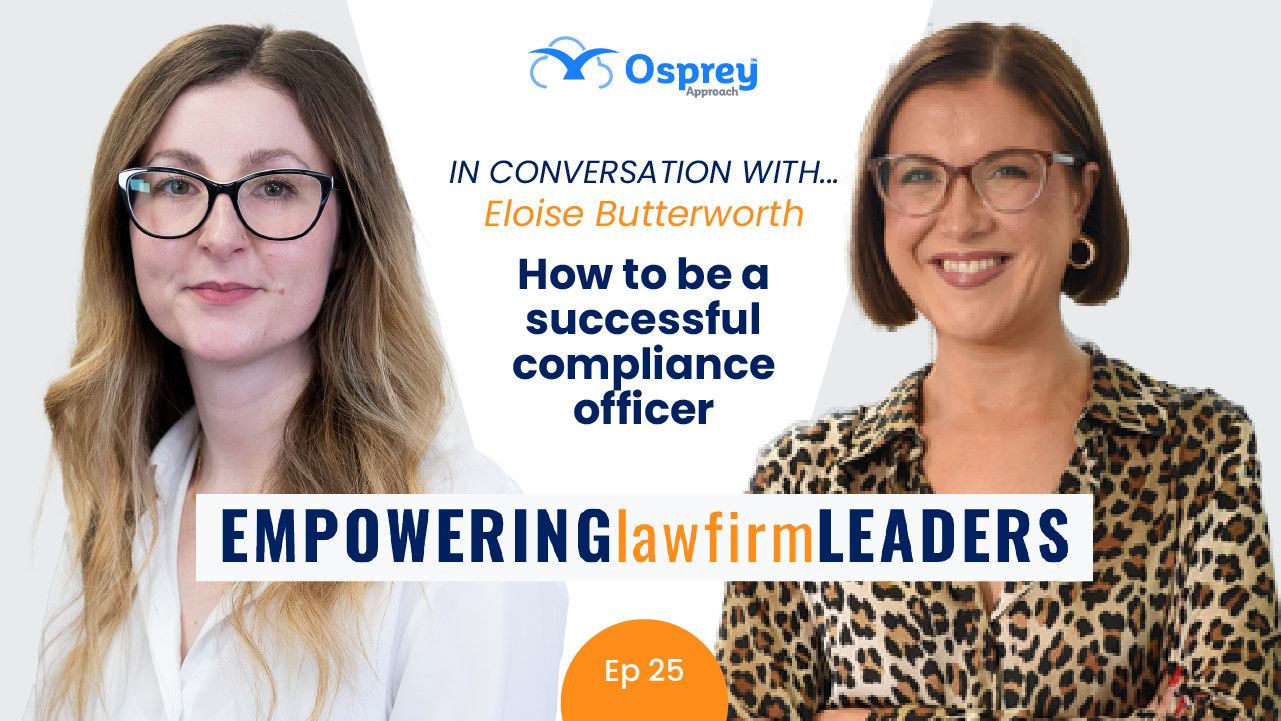
For episode 25 of Osprey Approach’s Empowering Law Firm Leaders podcast, Eloise Butterworth, head of risk and compliance at Hive Risk, spoke to Amy Bruce, marketing director at Osprey, to explain why compliance should be embedded into firm culture; helping leaders make better decisions, build trust across teams, and manage risk proactively.
Three things every law firm should know about compliance
- Compliance is strategic, not restrictive
Eloise reframes compliance as a driver of progress rather than a blocker. “Risk mitigation is strategic and as such it supports growth,” she explains, encouraging firms to view compliance as a proactive tool that underpins long-term success. - Don’t shoot the messenger
She reminds fee earners that the person delivering compliance requirements is often not the one who created them. “They didn’t write the legislation… they might not even have had a say in the firm’s approach,” Eloise says. This perspective encourages empathy and better communication between teams. - Compliance is a team effort
Eloise stresses that compliance professionals are allies, not adversaries. “We’re all on your side,” she says. “Your compliance officer, your MLRO, your COLP – they’re on your side. We’re all on one team together.” This reinforces the idea that successful compliance depends on collaboration across the firm.
Compliance is about people, not policies
“Compliance is about people, it’s not about rules,” says Eloise.
Rather than acting as gatekeepers, compliance professionals should be seen as strategic partners.
Eloise, who is one of LinkedIn’s top legal influencers, also encourages lawyers to remember that compliance officers are implementing regulatory requirements rather than creating them.
Building influence through authenticity
Alongside her role, Eloise has built a significant LinkedIn following by sharing practical advice and encouraging open conversations about risk and compliance.
“Getting compliance to click with people is not one size fits all,” she explains. “Expanding your network online really helps you see other views and other ways to approach things.”
Although initially uncomfortable with the term “influencer”, she now recognises the value of sharing insights that help firms better understand compliance.
“Do the posts that I put out there resonate with people? Yes, the data is there that backs that up,” she says.
Her audience extends beyond compliance professionals.
“The posts are training… opening their eyes to where they might need to focus on a particular risk area.”
Whether communicating online or within a firm, consistency matters.
“You’ve got to sit in that silence… and go again.”
The modern compliance officer
Compliance roles have evolved significantly in recent years.
“I start with a plan. [That] plan goes out the window pretty early on,” Eloise says.
She challenges the misconception that compliance is simply about AML checks.
“It’s basically everything that no one wants to touch,” she says. Increasingly, however, compliance professionals are earning a place within leadership teams.
“We’re seeing more and more now… compliance managers getting that seat at the big table.”
According to Eloise, the best compliance officers combine technical expertise with curiosity and emotional intelligence.
“Attention to detail, being inquisitive, curious… a desire to constantly adapt and improve,” are essential qualities.
Understanding colleagues and the commercial realities they face is equally important.
“This job is not about carrot and stick,” she says. “It’s way more nuanced than that.”
She also believes credibility comes from recognising that nobody gets everything right.
“We’re not infallible. We’re not robots.”
The risks firms can’t ignore
Looking ahead, Eloise believes firms should focus on three areas: ethics, anti-money laundering and technology.
“Ethics… that’s a real issue for the whole sector,” she warns, highlighting the importance of creating a culture where ethical decision-making is openly discussed.
AML also remains a significant challenge. “It’s quite clear from the sheer volume of SRA fines that it’s not nailed in a lot of firms,” she says, pointing to weaknesses in client and matter risk assessments.
Technology, meanwhile, presents both opportunities and new risks. “If you aren’t utilising tech, you’re going to fall behind… but without the right knowledge and risk frameworks in place, you’re going to be exposed,” she warns.
As AI and legal technology become increasingly embedded within legal practice, compliance professionals will play a vital role in helping firms innovate responsibly.
A strategic function for the future
Compliance is no longer simply about satisfying regulators. At its best, it strengthens decision-making, supports sustainable growth and builds confidence across an organisation.
Eloise’s message is clear: firms that integrate compliance into their wider business strategy, rather than treating it as a standalone function, will be better equipped to manage emerging risks while building stronger, more resilient businesses.
Watch the full interview with Eloise Butterworth now to discover more advice and guidance on being a successful compliance officer. You’ll also hear Eloise’s exclusive advice on what the future looks like for compliance as well as top tips for managing AML risk.
Kindly shared by Osprey Approach